
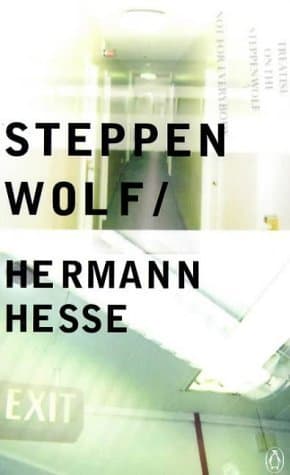
Steppenwolf
4.13
216,693 rating·10,980 ulasan
Steppenwolf adalah potret diri puitis seorang pria yang merasa dirinya setengah manusia dan setengah serigala. Kisah magis bak Faust ini adalah bukti filosofi Hesse yang mendalam dan rasa kemanusiaan yang luar biasa saat ia menceritakan tentang humanisasi seorang pembenci sesama di usia paruh baya....
- halaman
- 256
- Format
- Paperback
- Terbit
- 1999-01-01
- Penerbit
- Penguin
- ISBN
- 9780140282580
Tentang penulis
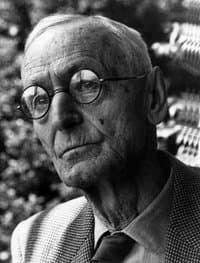
Hermann Hesse
100 buku · 0 pengikut
Many works, includingSiddhartha(1922) andSteppenwolf(1927), of German-born Swiss writerHermann Hesseconcern the struggle of the individual to find wholeness and meaning in life; he won the Nobel Prize for literature in 1946.Other best-known works of this poet, novelist, and painter includeThe Glass Bead Game, which, al...
Pembaca juga menyukai

Harry Potter dan Batu Bertuah (Harry Potter #1)
J.K. Rowling

Manifesto Kecanduan: Jalan Menuju Pemulihan
Jerry Weaver
Calvin dan Hobbes: Koleksi Esensial
Bill Watterson

Alkitab: Versi Internasional Baru
Anonymous
Harry Potter dan Relikui Kematian (Harry Potter, #7)
J.K. Rowling
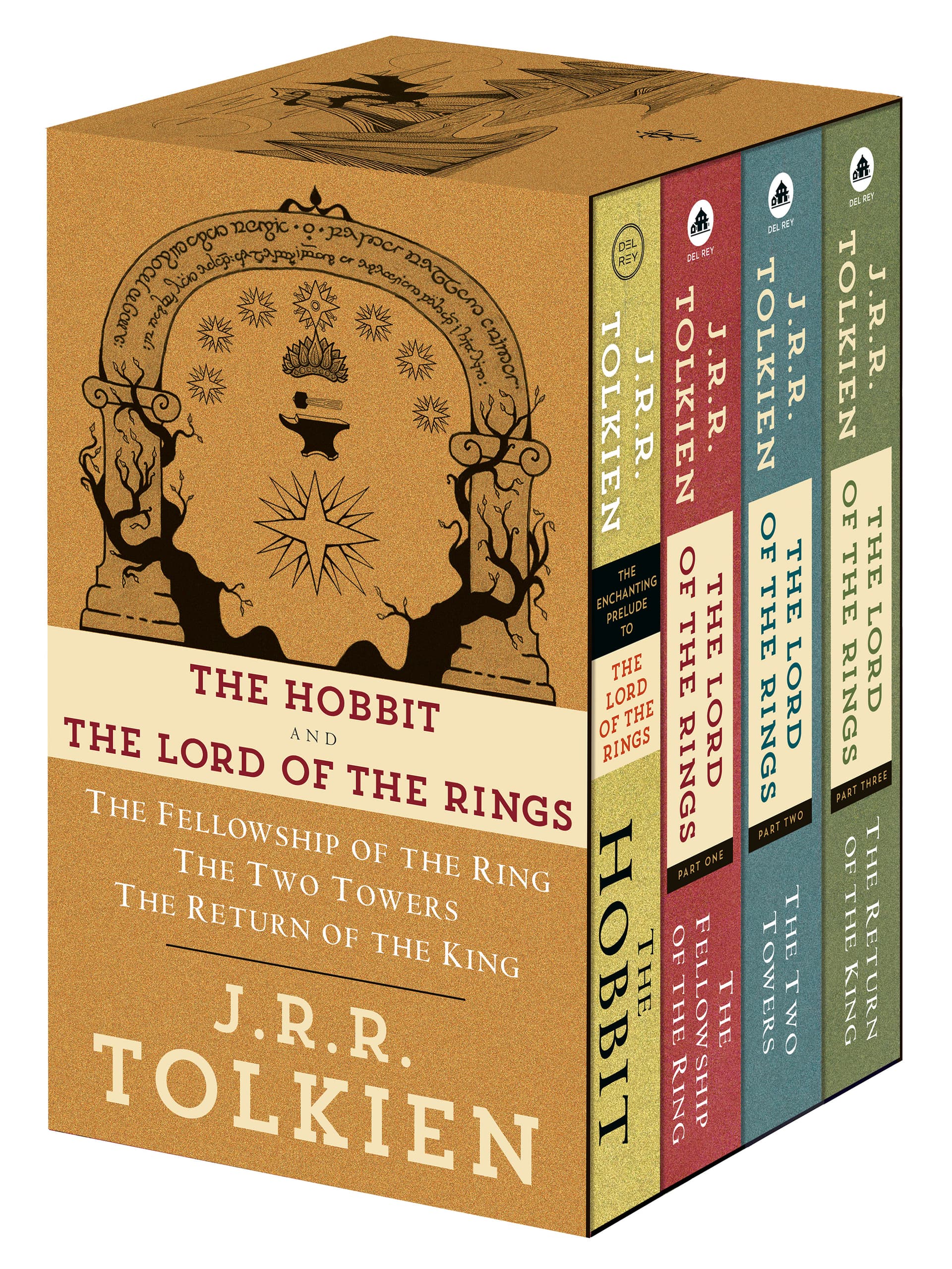
J.R.R. Tolkien: Kotak Set 4 Buku – The Hobbit & The Lord of the Rings
J.R.R. Tolkien
Rating dan Ulasan
What do you think?
Ulasan Komunitas
10,980 ulasan4.1
216,693 rating
5
45%
4
30%
3
15%
2
7%
1
3%

J.L. Sutton·7 years ago
“What could I say to you that would be of value, except that perhaps you seek too much, that as a result of your seeking you cannot find.”Having read several other novels by Hesse (Siddharta, Demian, Narcissus & Goldmund and Knulp), the theme of a protagonist intellectually or culturally isolated from the rest of society is familiar. However, in Steppenwolf, the depths of our protagonist’s (Harry’s) despair separates him from other of Hesse’s protagonists and from humanity. His life isn’t co...

Dave Schaafsma·7 years ago
for madmen onlyIn league with Pessoa’s Book of Disquiet and Dostoevsky’s Raskolnikov, Hermann Hesse’s Steppenwolf is about a suicidal guy who never actually commits suicide, a tortured soul who struggles with the dualism of his nature, from the human to the wolf, from the classical to the romantic, to the spiritual to the sinful, from the life of the mind to the life of the body. I read this three times when I was 18-20, trying to understand it, trying to find elements that would help shape my p...

Glenn Russell·7 years ago
Many literary novels are page-turners, filled with a compelling, straightforward storyline and lots of action; think of Our Mutual Friend and Crime and Punishment, think of Heart of Darkness and No Country for Old Men, or novels like The Girl with the Dragon Tattoo or The Spy Who Came in from the Cold. Hermann Hesse's novel Steppenwolf is a work of a completely different cast; a reader might find the story gripping, even riveting, but for much different reasons, for the action takes place not in...

Sean Barrs ·8 years ago
Hermann Hesse’s words are timeless. Here they represent an entire disaffected generation, a generation who is on the cusp of radical change but still partly exists in the old world. They are out of space and out of time: they are lost within themselves. However, such things can aptly be applied to a number of individuals across the ages. And, for me, this is what made the novel so great. Through these pages Hesse evokes a character I have seen many times before across literature, but never befor...

Vit Babenco·12 years ago
A view from the outside…Steppenwolf was a man nearing fifty who one day some years ago called at my aunt’s block of flats in search of a furnished room. Having rented the attic room up under the roof and the small bedroom next to it, he came back a few days later with two suitcases and a large book chest, and lodged with us for nine or ten months.The story is his notebooks he left after his departure… Loneliness… Solitude… Isolation… Seclusion… It’s a mode of his living… Steppenwolf is a loner… ...

sologdin·13 years ago
Likely the dumbest Important Book that I've read.Yeah, it's cool that the narrator thinks he's a werewolf, but is really just a recluse pseudo-academic--and then reads a manuscript that describes fake werewolves and outs them as poseurs. Cool, also, that the preface, by the manuscript's fictional finder and publisher, records the impression that the horrors of the middle ages were non-existent: "A man of the Middle Ages would detest the whole mode of our present day life as something far more th...

Lyn·14 years ago
Kurt Vonnegut, one of my literary heroes, said of Hermann Hesse’s novel Steppenwolf that is was “the most profound book about homesickness ever written”. Vonnegut also went on to describe how Hesse speaks to young readers, how he speaks to the essence of youth and offers hope.Like many readers, I first encountered Hesse as a young person, for me it was when I was in high school. Hesse’s illustration of isolation and being misunderstood spoke to me as a youth, as I imagine it has for many young p...

Game0ftomes·2 years ago
I find this to be a fascinating novel with an interesting structure and many ideas about the nature of human existence in modern society. I recommend it if you're looking for something a little different from what you've read before.

Luís·3 years ago
The Steppe Wolf is a novel by German writer Hermann Hesse. The author is a pacifist and a great humanist. The book was published in 1927. Although this novel was published at the beginning of the 20th Century, it has kept all its freshness and brilliance. This work is a robust, influential, and dense book. A preface by the publisher precedes this novel and explains how he came into possession of the manuscript. The main protagonist of the story is Harry Haller. He is in his fifties and lives alo...

Rajat Ubhaykar·14 years ago
I read this book on a twenty four hour train journey surrounded by the bourgeois. It was a terrifying experience. The book didn't change my life and was not meant to, but it gave me hope and hope is always a good thing. The influence of Indian spirituality on this book is apparent, but Hesse chooses to dissect it using the prism of Western pessimism. He talks about the multiplicity of the self and the infinite potential associated with it, how we often choose to attach fanciful restrictions to ...