
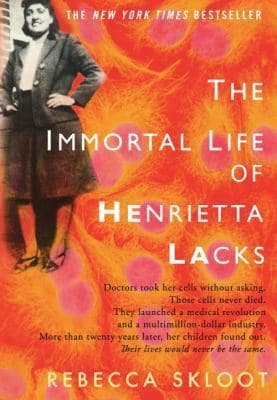
Keabadian Henrietta Lacks
4.13
807,377 rating·44,680 ulasan
Namanya Henrietta Lacks, tetapi para ilmuwan mengenalnya sebagai HeLa. Ia adalah seorang petani tembakau miskin dari Selatan yang mengerjakan tanah yang sama dengan leluhurnya yang diperbudak. Namun, sel-selnya—yang diambil tanpa sepengetahuannya—menjadi salah satu alat terpenting dalam dunia kedokt...
- halaman
- 370
- Format
- Hardcover
- Terbit
- 2010-02-02
- Penerbit
- Crown Publishing Group
- ISBN
- 9781400052172
Tentang penulis
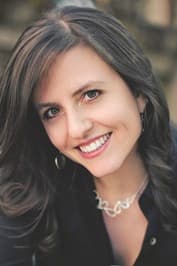
Rebecca Skloot
100 buku · 0 pengikut
Rebecca Skloot is an award winning science writer whose work has appeared inThe New York Times Magazine; O, The Oprah Magazine; Discover;and many other publications. She specializes in narrative science writing and has explored a wide range of topics, including goldfish surgery, tissue ownership rights, race and medici...
Pembaca juga menyukai

Harry Potter dan Batu Bertuah (Harry Potter #1)
J.K. Rowling
Manifesto Kecanduan: Jalan Menuju Pemulihan
Jerry Weaver

Takdir Sebuah Hari: Perang untuk Amerika, Fort Ticonderoga hingga Charleston, 1777-1780 (Trilogi Revolusi, #2)
Rick Atkinson

Alkitab Aplikasi Kehidupan: NIV
Anonymous

Alkitab: Versi Internasional Baru
Anonymous
Harry Potter dan Relikui Kematian (Harry Potter, #7)
J.K. Rowling
Rating dan Ulasan
What do you think?
Ulasan Komunitas
44,680 ulasan4.1
807,377 rating
5
45%
4
30%
3
15%
2
7%
1
3%

Dr. Appu Sasidharan (Dasfill)·5 years ago
This is a book about Henrietta Lacks, whose cells were taken without her knowledge, which later came to be known as HeLa cells, which is considered as one of the most important landmarks in Cancer research.
Some interesting topics discussed in this book
Johns Hopkins Hospital in 1950's
Johns Hopkins Hospital is one of the best hospitals in the USA. It was built in 1889 as a charity hospital for the sick and poor in Baltimore. In the 1950s, Hopkins' public wards were filled w...

Always Pouting·6 years ago
This was a really good book that leaves one with more questions than it answers, especially at this moment with the explosion in investment and growth in health/biotech. A lot of those questions are ones I wouldn't know how to answer myself either. I think it's really important though that we all start grappling with and instituting better processes around things like informed consent. Also really horrible to think about this in larger societal terms, in the context of institutional racism, and ...

NickReads·7 years ago
This is such an important story. HeLa cells were a miracle to humanity and all thanks to Hernietta Lacks and the doctor.
It is a must-read.
It is a must-read.

Emily May·9 years ago
“She's the most important person in the world and her family living in poverty. If our mother is so important to science, why can't we get health insurance?”
I've moved this book on and off my TBR for years. The truth is that, with few exceptions, I'm generally turned off by the thought of non-fiction. I'm a fan of fictional stories, and I think I've always felt that non-fiction will be dry, boring and difficult to get through. Especially a book about science, cells and medicine when I'm more...

Laura·15 years ago
Fascinating and Thought-Provoking.
Strengths:
*Fantastically interesting subject!One woman's cancerous cells are multiplied and distributed around the globe enabling a new era of cellular research and fueling incredible advances in scientific methodology, technology, and medical treatments. This strain of cells, named HeLa (after Henrietta Lacks their originator), has been amazingly prolific and has become integrated into advancements of science around the world (space travel, genome research,...

Chelsea·15 years ago
This could have been an incredible book. Henrietta Lacks' story is finally told--and Skloot makes very clear how important Lacks' cells have been to the last 60 years of science and, paradoxically, how much Henrietta and her family suffered because those cells were taken from Henrietta without her consent. But in her effort to contrast the importance and profitability of Henrietta's cells with the marginalization and impoverishment of Henrietta's family, Skloot makes three really big mistakes. F...

Kemper·15 years ago
The doorbell rang the other day and when I answered it, there was a very slick guy in a nice suit standing there and a limousine parked at the curb. He started shaking my hand and wormed his way into the house.“Mr. Kemper, I’m John Doe with Dee-Bag Industries Incorporated. I need you to sign some paperwork and take a ride with me. Don’t worry, I’ll have you home in a day or two,” he said. Then he pulled a document out of his briefcase, set it on the coffee table and pushed a pen in my hand. “Wai...

Will Byrnes·15 years ago
On October 4, 1951, Henrietta Lacks, a thirty-one-year old black woman, died after a gruesome battle with a rapidly metastasizing cancer. During her treatment, the doctors at Johns Hopkins took some cells from her failing body and used them for research. This was not an unusual thing to have done in 1951. But the cells that came from Ms. Lacks’ body were unusual. They had qualities that made them uniquely valuable as research tools. Labeled “HeLa”, Henrietta’s cells were reproduced by the billio...

Petra X·15 years ago
This is an all-gold ten-star read!It's actually two stories, the story of the HeLa cells and the story of the Lacks family told by a journalist who writes the first story objectively and the second, in which she is involved, subjectively. The contrast between the poor Lacks family who cannot afford their medical bills and the research establishment who have made millions, maybe billions from these cells is ironic and tragic. It has been established by other law cases that if the family had gone ...

Kathleen·15 years ago
My thoughts on this book are kind of all over the place. I feel for the Lacks family, I really do. It's hard to read about the poverty and lack of education and the cavalier approach towards informed consent in the early days of Johns Hopkins Research Hospital. The fact that the HeLa cell line is the foundation of so much valuable research is rightfully a source of pride for the family of Henrietta Lacks. I don't think they will ever see monetary compensation for their mother's cancer cell line,...