
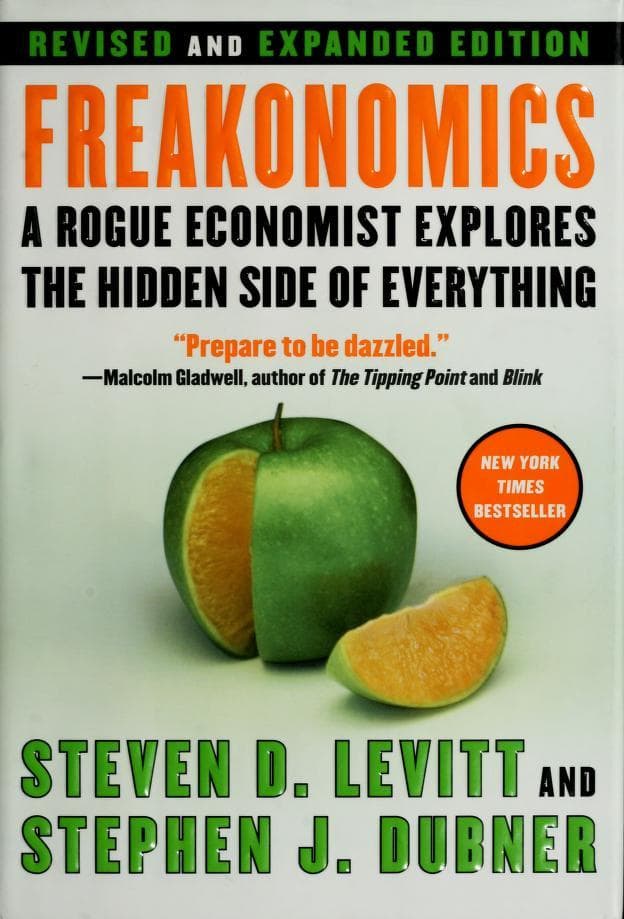
Freakonomics: Sisi Lain dari Segala Sesuatu
4.01
899,360 rating·20,559 ulasan
Mana yang lebih berbahaya, pistol atau kolam renang? Apa kesamaan antara guru sekolah dan pegulat sumo? Mengapa pengedar narkoba masih tinggal dengan ibunya? Seberapa besar pengaruh orang tua? Dampak apa yang Roe v. Wade berikan pada kejahatan dengan kekerasan? Freakonomics akan mendefinisikan ulang...
- halaman
- 268
- Format
- Hardcover
- Terbit
- 2006-10-17
- Penerbit
- William Morrow
- ISBN
- 9780061234002
Tentang penulis

Steven D. Levitt
34 buku · 0 pengikut
Steven David Levitt is an American economist and co-author of the best-selling book Freakonomics and its sequels (along withStephen J. Dubner). Levitt was the winner of the 2003 John Bates Clark Medal for his work in the field of crime, and is currently the William B. Ogden Distinguished Service Professor of Economics...
Pembaca juga menyukai

Manifesto Kecanduan: Jalan Menuju Pemulihan
Jerry Weaver
Alkitab Aplikasi Kehidupan: NIV
Anonymous

Takdir Sebuah Hari: Perang untuk Amerika, Fort Ticonderoga hingga Charleston, 1777-1780 (Trilogi Revolusi, #2)
Rick Atkinson
Alkitab: Versi Internasional Baru
Anonymous

Kelak, Semua Orang Akan Selalu Menentang Ini
Omar El Akkad

Maus: Edisi Lengkap
Art Spiegelman
Rating dan Ulasan
What do you think?
Ulasan Komunitas
20,559 ulasan4.0
899,360 rating
5
45%
4
30%
3
15%
2
7%
1
3%

Sofia·3 years ago
I lost all faith in this book when it tried to teach you how to be a “perfect parent” and came to the conclusion that “it isn’t so much a matter of what you do as a parent; it’s who you are.” He claims that your socioeconomic status determines whether or not you will be a good parent. One of his biggest points in this chapter is that nothing a parent does (for example, taking their child to museums or reading books to their toddler) matters in the slightest. The only data he uses to draw this co...

BookHunter M ُH َM َD·9 years ago
مبدئيا هناك خدعة في عنوان الكتابفالكتاب ليس في الاقتصاد و لكن في علم الاجتماع و لأن المؤلف رجل إقتصاد و لأن الاقتصاد هو أحد فروع علم االإجتماع فقد استخدم ما تعلمه في تحليل بعض الظواهر الاجتماعية بأدوات إقتصادية.مجموعة من المواضيع بعضها شيق جدا و بعضها ممل أو مغرق في المحلية لدرجة لا تجعلنا نتفاعل معه. ما هي الأشياء المشتركة بين معلمى المدارس و مصارعى السومو يبدو سؤالا ساذجا و لكن الإجابة سهلة.هي أسئلة من نوعية ما وجه الشبه بين البطيخ و الموز و تأتى الإجابة بأن كل منهما لا يصلح كعصير برتقال.إجابة...

☘Misericordia☘ ⚡ϟ⚡⛈⚡☁ ❇️❤❣·9 years ago
Extremely enlightening! Worthy of 15 stars out of 5! This is a book about the world and not about any science in particular. It's about learning to question the given and see beyond the obvious. An extremely useful gift in the misguiding modern world.Yeah, populistic much too much but neverthless compulsively readable. A definite revisit and reread.Q:As Levitt sees it, economics is a science with excellent tools for gaining answers but a serious shortage of interesting questions. His particular ...

Emily May·9 years ago
I won't deny that this is a very interesting, compelling and thought-provoking book. Even for someone like me whose general response to economics is *snore*. And it's mainly because Freakonomics is not really about economics, but involves applying statistical analysis to many social issues and questions. Very easy to read. Lots of shocking discoveries that seem weighted in fact - Roe v. Wade is responsible for a huge drop in crime? No wonder some people are pissed off with this book. It's really...

Lyn·14 years ago
Freakonomics explores the hidden side of everything. If morality describes the ideal world, then economics describes the actual world. Further, Freakonomics studies incentives and how different people in different professions respond. Some of the case studies include bagel salesmen, sumo wrestlers, public school teachers, crack cocaine dealers and parents. This is a smart, fun book; but it's not for everyone. Through a high nerd prospective, the authors deliver a slide rule and pocket protector ...

Andrew Muckle·14 years ago
Jesus H Tittyfucking Christ on a bike! Could these two tossers be any more smarmy and self indulgent? Levitt and Dubner and probably the kind of smart arse nerds who snigger at you because you don't understand linux but sneer at you because you've actually spoken to a woman. This book is much like the Emperor's New Clothes, people are so scared about being left out if they don't like or understand it because some sandal wearing hippy in the Guardian said it's 'This year's Das Capital' or some su...

Manny·17 years ago
I loved this book, though I think the title is a bit misleading. It's not really about economics. In fact, he's showing you what interesting things you can discover when you apply statistical analysis to problems where you wouldn't normally think of using it. I use statistical methods a fair amount in my own work, so I found it particularly interesting. The most startling and thought-provoking example is definitely the unexpected reduction in US urban crime that occurred towards the end of the 2...
J
Jim·18 years ago
This was an interesting book. I say it was interesting because I started liking it (a lot) when I first read it, as time passed I liked it less and less. In that way I call it a candy book, tastes good at first but leaves you worse off for reading it. In my opinion, there are two problems with the book: First, Stephen Dubner comes across as a sycophant. Way to much of the book is spent praising Levitt. Secondly, I was disappointed in the lack of detail provided about Livitt's hypothesis. I wante...

Rachel·18 years ago
Sure, this book was a compelling read that offered us all some great amo for cocktail party conversation. But ultimately I think most of what Leavitt claims is crap. He dodges accoutability with the disclaimer about his book NOT being a scholarly work, but then goes on to drop statistics, theories and expert opinions. These assertions laid, he doesn't provide readers with enough information to critically examine his perspectives.Ultimately I have a problem with the unquestioned, unaccoutable rol...

Justin·18 years ago
I guess some people don't like this book because it's not centered around one theme. Instead, it's more about the seemingly diffuse academic work of one of the authors Steven D. Levitt (the other author is a journalist, Stephen J. Dubner). Levitt is something of an economist but more like a social scientist using the tools of Microeconomics applied to other fields that happen to catch his interest (often having something to do with cheating, corruption, crime, etc.). In the back of the book he m...