
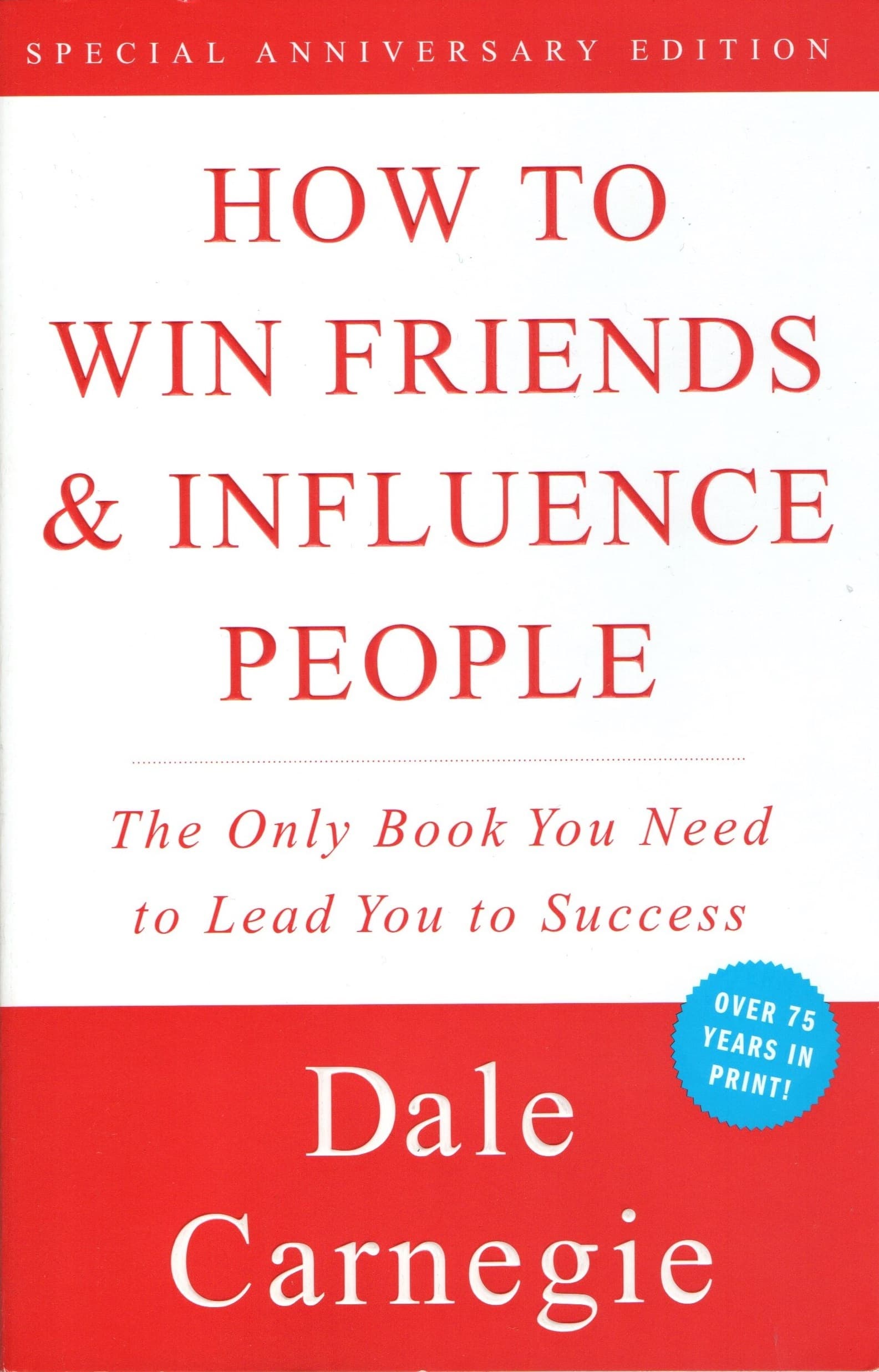
Come trattare gli altri e farseli amici
4.22
1,154,489 valutazioni·30,035 recensioni
Puoi ottenere il lavoro che desideri... e farcela! Puoi prendere il lavoro che hai... e migliorarlo! Puoi affrontare qualsiasi situazione... e farla funzionare a tuo vantaggio! Dalla sua pubblicazione nel 1936, Come trattare gli altri e farseli amici ha venduto oltre 30 milioni di copie. Il primo li...
- pagine
- 288
- Format
- Paperback
- Pubblicato
- 1998-01-01
- Editore
- Gallery Books
Sull'autore

Dale Carnegie
567 libri · 0 follower
Dale Carnegie was an American writer and teacher of courses in self-improvement, salesmanship, corporate training, public speaking, and interpersonal skills. Born into poverty on a farm in Missouri, he was the author of How to Win Friends and Influence People (1936), a bestseller that remains popular today. He also wro...
Ai lettori è piaciuto anche

Manifesto sulla Dipendenza
Jerry Weaver

Bibbia di Studio Life Application: NIV
Anonymous

Il Destino del Giorno: La Guerra per l'America, da Fort Ticonderoga a Charleston, 1777-1780 (Trilogia della Rivoluzione, Vol. 2)
Rick Atkinson

La Sacra Bibbia: Nuova Versione Internazionale
Anonymous

Un Giorno, Tutti Si Saranno Sempre Opposti a Questo
Omar El Akkad

Maus: La storia di un sopravvissuto
Art Spiegelman
Valutazione e Recensione
What do you think?
Recensioni della comunità
30,035 recensioni4.2
1,154,489 valutazioni
5
45%
4
30%
3
15%
2
7%
1
3%

Jonathan O'Neill·2 years ago
1 ⭐ Holy hell! Give it a rest, Dale! (H)Why, oh hwhy, did I read this?! Carnegie’s principles display, boldly, the many wrinkles of their age but it’s not only that; it’s very hard to believe that this book/course was ever considered useful information, nay, even anything beyond laughable, by any self-respecting individual! To summarise a few select points: 1. Remember, and relentlessly repeat, the victim’s name during conversation. That sweet, sweet nectar that is one’s own name will have them...

Anne·4 years ago
There's actually some pretty decent advice here that sort of stands the test of time. But like most self-help books, a lot of the advice doesn't work in every situation and/or is just flat-out situational. I also think the winning friends part of the book is less about having true friendships than about how to win over a room or how to convince people to see things your way. I wouldn't think that smiling and being agreeable, which is great on the surface and a good way to behave in general, wou...

Adina ( catching up..very slowly) ·7 years ago
I bought this one in 2004 from an Amsterdam bookstore and it has been laying on my bookshelves since then. It's an icon of self help books, and that was a problem because I kind of hate that genre. I decided to get rid of this one as well, but not without trying, at least, to see if there is anything of value in it. Well, I was surprised to read some sensible advice. it was charming charming in an archaic way. So, the book wasn't total garbage. As I said above, it had some good advice about the ...

Sheri·7 years ago
Easy to understand advice for building and improving positive and successful relationships with people in all areas of your life. Not a book per se for making friends, although it certainly can be used that way (with a grain of salt perhaps), but more directly a book that promotes good communication, kindness, and the social skills to foster healthy and productive working relationships. I can see how some people are taken aback by Carnegie’s advice. You have to be in the right frame of mind to t...

Roy Lotz·9 years ago
When dealing with people, let us remember we are not dealing with creatures of logic. We are dealing with creatures of emotion, creatures bristling with prejudices and motivated by pride and vanity.
Dale Carnegie is a quintessentially American type. He is like George F. Babbitt come to life—except considerably smarter. And here he presents us with the Bible for the American secular religion: capitalism with a smile. In a series of short chapters, Carnegie lays out a philosophy of human inter...

Cathy Patton·12 years ago
This is the most boring, tedious, inane book I've ever read. It is a total of 236 pages but the essence could be boiled down to 12 at most. Every chapter, he has one point summarized in a neat box at the end. I skimmed the rest. He gives you six examples when one or two would do. He deliberately repeats himself. He wastes the readers' time.
Do yourself a favor and just read the "In a Nutshell" summary points at the end of each chapter. You won't miss anything.
Do yourself a favor and just read the "In a Nutshell" summary points at the end of each chapter. You won't miss anything.

Navin·13 years ago
This is a sad book. A book that aims to turn us into manipulating individuals who would want to achieve their means through flattery and other verbal-mental tricks. Even technically, it seems to me that the ploys' in this book would never really work. Here is a quote from the book - “Don't be afraid of enemies who attack you. Be afraid of the friends who flatter you.” And what does the book do? It tries, or at least pretends to turn you into a someone who would flatter everything that moves – so...
C
Caroline·15 years ago
This book had a profound effect on me, however, of the negative variety. It did give me pointers on how to actually break out of my shell and "win friends" but in the long term, it did way more harm than good. Not the book per se, but my choice to follow the advice given there. The book basically tells you to be agreeable to everybody, find something to honestly like about them and compliment them on it, talk about their interests only and, practically, act like a people pleaser all the time.It ...

Ivan·18 years ago
Three things about this book surprised me and I liked it a lot more than I thought I would. One - it seemed pretty much timeless. Not much anachronism here, because language still serves the same purposes as ever, and people still want basically the same things they've always wanted. I liked the examples taken from Abe Lincoln, etc.Two - the techniques described in the book aren't duplicitous. We all try to do what the title says, just like everyone else, whether we're admitting it to ourselves ...

Conrad·18 years ago
Dale, saying people's names often when you're talking to them, Dale, doesn't make you popular, Dale, it makes you sound like a patronizing creep.
This book is probably really handy when you're trying to befriend kindergarteners, not as much adults. It's also aimed at salespeople and not regular humans.
This book is probably really handy when you're trying to befriend kindergarteners, not as much adults. It's also aimed at salespeople and not regular humans.